
Viry, France, August 14th - 21st, 1910
A Swiss aviation meeting - in France
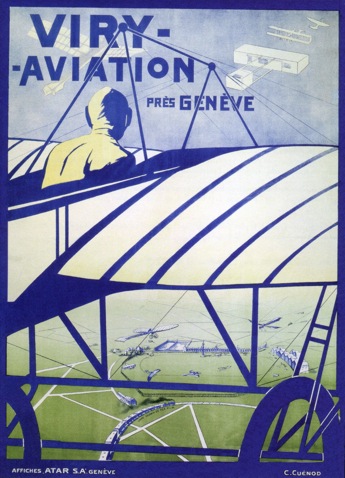
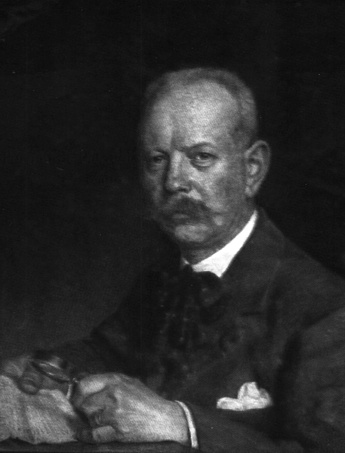
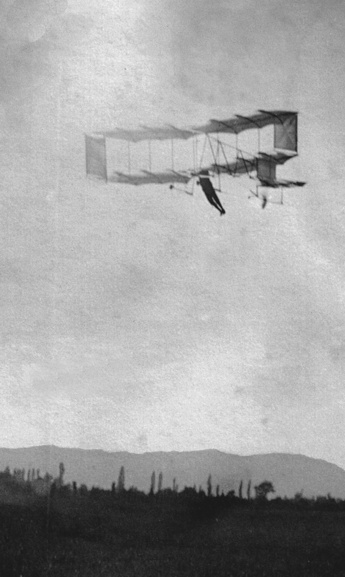
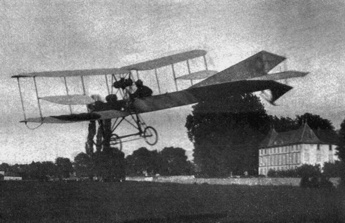
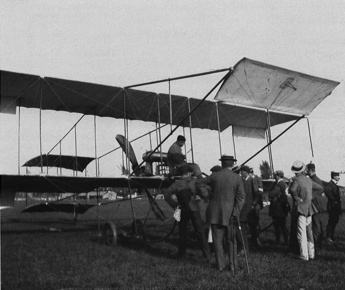
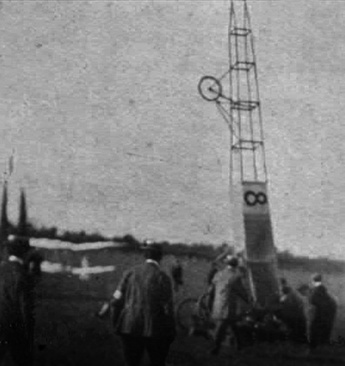
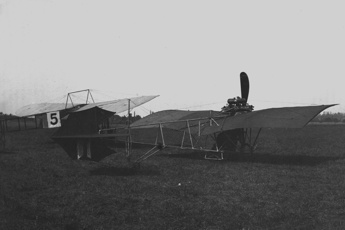
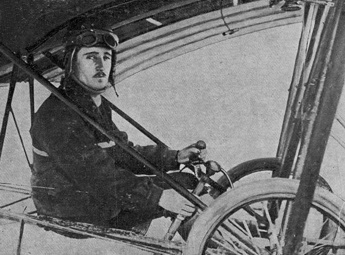
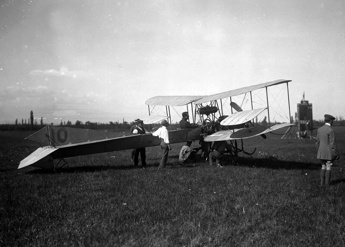
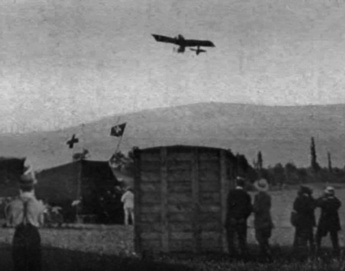
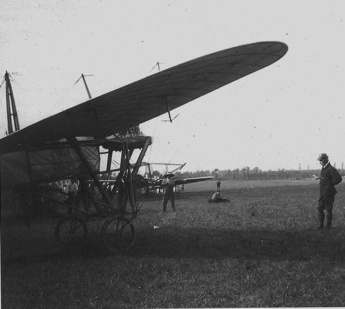
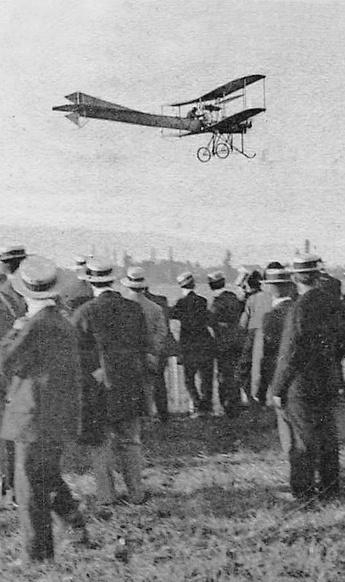
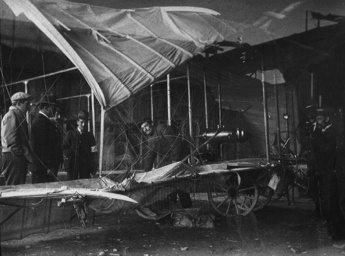
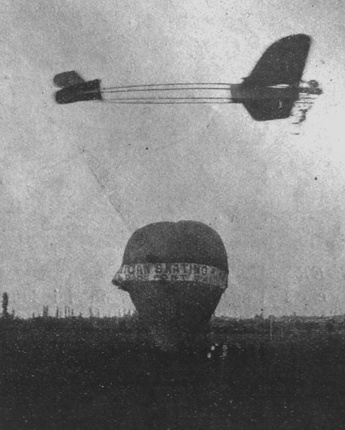
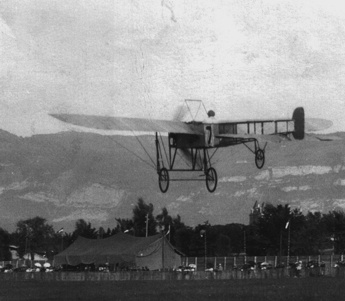
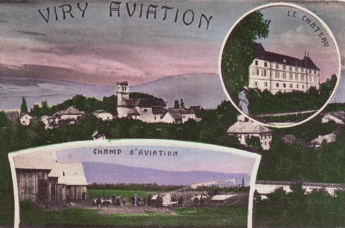
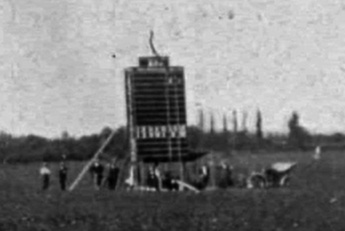
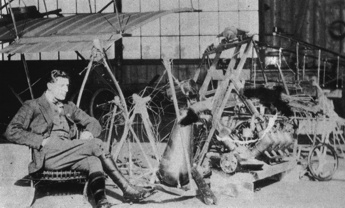
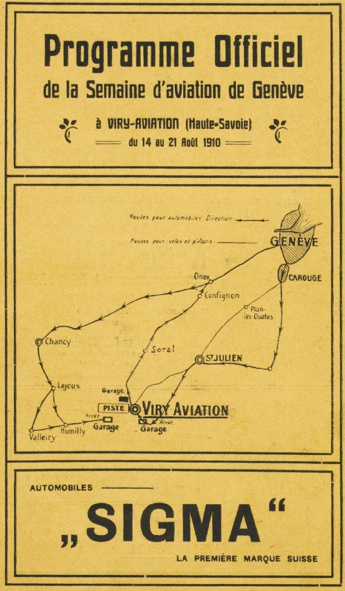
It has been difficult to find photos from this meeting. If you know of any photos that could be of interest, please contact us!
In 1910, Geneva was the third biggest town of Switzerland, with a population of around
125,000. It was already then a wealthy town, known for its famous clocks and watches, but
it also had many other industries and a substantial trade on the Lac Leman, as well as
tourist industry. In 1909 interest in aviation grew in Geneva. Brothers Armand and Henri
Dufaux, who had made flying experiments since a couple of years, looked for a place to test
their machines. In October 1909 two organizations were formed, first the "Club Suisse
d'Aviation", which later turned into the "Aéro-club de Genève", and then
the "Club Genevois de l'Aviation". The driving forces included the Dufaux
brothers, a couple of local newspapers, and two automobile importers who wanted to expand
into aviation, Henri Speckner and Charles Nigg, with Farman and Blériot interests
respectively.
It was difficult to find a good location for an airfield in the immediate vicinity of
Geneva. The Dufaux brothers had tested their first machine at Bière, around 70 kilometres
away in the neighbouring canton Vaud. The solution was finally found in France, some 15
kilometres southwest of Geneva: Count Pierre de Viry, the owner of the Château de Viry, in
the little commune of Viry in Haute-Savoie, less than two kilometres from the Swiss border,
was an aviation enthusiast. He was interested in leasing a field on his property to the
Geneva aviators. The idea of a Geneva airfield in France was not as strange as it might
seem. The former kingdom of Savoy had only been integrated in France fifty years earlier.
Many locals worked and had businesses in Geneva, which was the nearest major town. The
region did most of its trade with Geneva and parts of the region belonged to a toll-free
zone.
In November 1909 a tent hangar was installed and the first planes moved in, a Voisin owned
by Nigg and two Blériots, one owned by Speckner and the other by Alphonse Carfagni, another
Geneva automobile importer. They were followed by the Dufaux brothers and their biplane,
and experimental flights began. In January 1910 the men named above, together with a
journalist by the name of François Dégerine, formed the "Société anonyme de
l'Aérodrome de Viry" in order to run the airfield. The airfield installations were
improved, mainly financed by Pierre de Viry. More hangars were built, the surface of the
field was improved, fences were built, and a canteen was established.
Another society, the "Société Genevoise de l'Encouragement à l'Aviation",
was organized, with the prime object of organizing an aviation meeting during the summer.
The event was scheduled in conventional Sunday-to-Sunday format, on August 14th - 21st,
with official flying hours between three and seven o'clock. Several Geneva businesses
and societies sponsored prizes for different contests. There would also be contests for
gliders and kites. Twelve pilots entered fourteen planes, according to the official
program:
- Edmond Audemars (Switzerland), Demoiselle
- Edmond Audemars (Switzerland), Tellier
- Stefano Amerigo (Italy), Aviatik
- Ernest Paul (France), Voisin
- Louis Mouthier (France), Blériot
- Ernest Failloubaz (Switzerland), Demoiselle
- Ernest Failloubaz (Switzerland), Blériot
- Émile Taddéoli (Switzerland), Blériot
- Henri Dufaux (Switzerland), Dufaux
- Armand Dufaux (Switzerland), Dufaux
- Alphonse Carfagni (Switzerland), Blériot
- Charles Nigg (Switzerland), Farman
- Richard von Unruh (Germany), Blériot
- Henri Speckner (Switzerland), Prampolini
Several of the pilots had had very short time for preparation. The Dufaux brothers only received the Gnôme engine for their latest biplane in the week before the meeting. They only had time to make a two-lap test flight before the meeting started. Taddéoli was in a similar situation, taking delivery of the five-cylinder Anzani engine for his new Blériot during the week before, and his plane didn't arrive until the Saturday. It was believed that Failloubaz hadn't even flown his Blériot before the meeting, but oil stains on the fuselage proved that it had at least been run. Carfagni had crashed on August 11th, but had managed to repair his machine before the meeting. The planes of Audemars, Paul and Mouthier arrived on the Saturday morning.
Sunday 14 August
The weather was bright, but in the morning a strong wind was blowing from the north. The roads around the airfield were full of people and all kinds of means for transportation, and an orchestra was playing at the entrance. The crowd was estimated to 12,000 persons, but it was claimed that 5,000 persons outside the airfield watched the event without paying.
The day started with some flights by car-towed gliders. At three o'clock, when a cannon shot signalled the start of official flights, it was still too windy for aeroplanes. The wind fortunately soon decreased, and forty minutes later Armand Dufaux was first to climb into the seat of his plane. At 15:50 he made an effort at the take-off price, with a clean run of 60 m. He then made a flight of four laps, landing because he got oil from the engine in his face. He took off again at 16:10, but only made a straight flight to the opposite end of the field. At 16:21 he took off from there and made a flight of nine minutes, flying very low.
At 16:34 Audemars, the other local hero, brought out his Demoiselle, his engine loudly popping and banging. He first flew several laps during a 12-minute flight, then returned to make a second flight of 27 minutes, completing 17 laps. Dufaux also added 15 minutes to his flight time. He was followed by Failloubaz, who made a couple of straight-line flights. At 17:22 Amerigo made a short flight, but was disturbed by turbulence and landed immediately. The rigging of his machine was slightly damaged.
Paul made his first effort at 17:47. The air was still quite turbulent in the straight between the scoreboard and the canteens. He was troubled by the turbulence and was forced to abandon his first flight immediately after passing the start/finish line. He returned to the hangars to adjust the rudder. Soon afterwards he made a second try, but he gave up without completing a lap. His machine was apparently suffering from other rigging problems too, perhaps because it had been assembled too quickly after his arrival. Mouthier had similar problems and only made a short test flight. Taddéoli's crew tested the engine of his machine, but they had forgotten to tie down the machine before the engine was started and the runaway machine ended up on its nose. Fortunately, nobody was injured, but the propeller had to be replaced.
After a while Dufaux took off again, having announced that he would try to fly for an hour. His machine worked flawlessly and after turning lap after lap around the course he landed after 1 h 01:27.8, receiving a standing ovation when returning to the hangar. This won him the Prix Gondrand for the longest flight of the day. Meanwhile, Amerigo's machine was equipped with a barograph. He took off for the altitude prize, but his engine didn't run well. He only reached the disappointing altitude of 40 metres, and was officially credited with only 30 metres.
During the late afternoon Amerigo, Audemars, Dufaux and Failloubaz made short flights. Failloubaz had some engine problems. At 19:30 von Unruh brought out his Blériot and tried to take off, but almost immediately crashed to the ground. The pilot was unhurt, but a wing and a wheel were broken. The damages put him out of action for the rest of the meeting.
The commission decided to extend the flying time by an hour, until eight o'clock. When the cannon shot finally announced the end of the day's flying Dufaux was again in the air, adding four further laps to his total, together with Audemars. Dufaux's total was 1 h 36:39.6. Audemars' total was 42:40.0, and he won the Prix Herman Borel for the fastest lap of the day with a time of 1:29.6. Amerigo's total was 23:55.2.
Monday 15 August
After the successful first day, the second day was a disappointment. The weather was bright but very windy, and the hills and forests around the airfield generated dangerous turbulence. Armand Dufaux took off at 15:26, but had obvious difficulties and landed heavily from an altitude of 5-6 metres after a lap and a half. A wheel got caught in the soft ground and the machine stood on its nose, damaging the right wing, the landing gear and the propeller. The oil tank was thrown 20 metres from the wreckage. The pilot was unhurt and after inspecting the machine in the hangar, the brothers stated that it would probably be possible to repair it before the next day.
The accident was followed by a long pause during which M. Gilles tried his glider. He reached an altitude of 60 or 70 metres, but crashed when landing and was slightly injured. At 17:02 Audemars tried to take off, but a tire blew before he got far. Later in the day he made three more unsuccessful tries, suffering from engine problems. Amerigo took off at six o'clock, but landed after a straight hop, declaring that the conditions were too dangerous. He made a second try at 19:15, but he had difficulty controlling the machine and gave up after the first turn and returned rolling on the ground. Paul and Taddéoli also tested their machines, but only made short straight-line jumps. The organizers had again extended the flying hours to eight o'clock, but in the end the crowds, almost as big as on the first day, had to leave without seeing any real flying. No flights were officially timed. There were some protests from the spectators, and some people wanted their money back, but their claims were denied.
Tuesday 16 August
Attendance was down considerably in comparison with the previous days, estimated to only 3,000, but those who did travel to the airfield got to see quite a bit of action. At 16:07 Amerigo took off and flew three laps in a wind of 3 m/s, looking perfectly under control. Audemars had replaced the engine of his Demoiselle and took off 42 minutes later. He flew five laps in only seven minutes before landing with a leaking fuel tank. Taddéoli took off at 17:33, carrying a barograph for the altitude contest. The take-off was perfect, but he was disturbed by turbulence and landed without completing a lap. Failloubaz tried for the shortest take-off contest, but failed to improve on Dufaux's result. Audemars then made two more flights, completing two and a half laps, while both Amerigo and Carfagni were disturbed by the wind and landed immediately. The flights of Audemars and Carfagni were also efforts for the take-off contest, but neither of them managed to get off quickly enough to beat Dufaux's mark. At 18:09 Amerigo took off again, this time cruising majestically around the course for twelve minutes. Failloubaz made a short straight-line flight, then Taddéoli took off and quickly climbed high over the airfield. He landed after five minutes. At 18:20 Audemars rolled out his big Tellier monoplane. He first made a short hop, landing in the middle of the field and returning to the hangar. He immediately took off again and flew half a lap before almost copying Dufaux's accident the day before. The landing gear and the propeller were broken, but the crew stated that the machine could be repaired quickly.
Mouthier then failed to get his Blériot off the ground, and immediately afterwards Failloubaz took off and flew four laps. Amerigo took off again for a low four-minute flight. It was almost completely calm as the closing time approached. The Dufaux brothers had not yet managed to repair their Gnôme-engined machine. They rolled out their spare machine, powered by a 40 hp ENV engine, but Armand Dufaux failed to get it off the ground. At 18:54, immediately before the end of flying, Taddéoli took off. He quickly climbed high and after completing a lap he made a tour outside the airfield, the crowds cheering and applauding. He landed just before the cannon was fired at seven o'clock. Carfagni had also taken off at the last moment, but crashed immediately after the cannon shot when the machine suddenly pitched down on the back straight. The machine was rather badly damaged, and people rushed to the accident site, but the pilot was unhurt. He was grounded for the rest of the meeting, though. Audemars flew two more laps, which didn't count for his total, since the official timing was closed.
The official flying times were only recorded for completed laps, so despite the high number of flights the totals of the day were not impressive. Amerigo had recorded the day's longest total time, 15:29.0, beating Taddéoli, Failloubaz and Audemars. Taddéoli's 60 metres was enough to take the lead in the altitude contest.
Wednesday 17 August
The weather was bright and hot. In the morning Paul rolled out his Voisin for a test. After a short flight he decided to land to adjust the rigging, but when he touched down the wheels hit a soft spot and the machine crashed heavily on one wing. It was badly damaged, but to everybody's relief the pilot was conscious and had only injured a shoulder.
The first to make an official flight was Amerigo, who took off at 15:27 and stayed in the air for four and a half minutes. Later in the afternoon he made three more flights, the longest for 22 minutes, and also took over the lead in the altitude contest by reaching 80 metres. Taddéoli also made four flights, the longest for eight minutes, but he had ignition problems and was disappointed that he could only reach 100 metres of altitude. Failloubaz made two flights, totalling almost thirteen minutes, again failing to improve his result in the take-off contest, while Audemars' engine troubles continued. He only made two short flights in his Demoiselle and gave up for the day when the mounting of his fuel tank failed. Mouthier and Speckner made some tests, but neither made any official flights.
The 1,200 francs "Prix de l'Association des Intérêts de Genève" for the highest flight during the first four days of the meeting was to be decided on the Wednesday. Since time was running out, and there was only one recording barograph available, it was decided that Amerigo and Taddéoli would make their final efforts at the same time, which they did at around half past seven. Amerigo took off first, immediately followed by Taddéoli. While Amerigo climbed steadily, Taddéoli suddenly dropped and landed. He soon took off again, but his engine didn't run well and he had to give up. After reaching 180 metres, Amerigo descended, cut his engine and made a perfect "vol plané" in front of the enthusiastic spectators.
Amerigo's total of 45:18.6 was by far the day's longest, but he still trailed Armand Dufaux, whose machine was still not repaired, in the totals of the meeting. Taddéoli's time of 3:22.2 over two laps put him in the lead of the speed contest.
Thursday 18 August
Although the wind was not too bad, the weather was very hot. Several of the pilots complained that the excessive heat made it difficult to make the engines run well, and that the trees around the course still generated dangerous turbulence. The 4,000 visitors didn't have much to look at during the afternoon. Audemars in his Tellier, Failloubaz, Armand Dufaux in his repaired machine, and Mouthier made short tests, but none of them long enough to be officially recorded. Around six o'clock there were three machines in the air at the same time, which resulted in Failloubaz colliding with Audemars' Tellier, which he hadn't seen on the ground when he came down to land. The damages to the tail of the Tellier were not big, but forced Audemars to switch to his Demoiselle.
Taddéoli was the first to make a longer flight. At 18:03 he made a four-lap flight in good style, trying for the speed prize. Failloubaz tried several times to beat the 60 metres take-off distance and take over the lead, but without success. At 18:55 Taddéoli took off again, going for the altitude prize and at the same time collecting total flying time. He landed after eleven minutes, without reaching more than 40 metres. After a short rest he took off again and kept flying until the cannon shot marked the end of the day. Meanwhile, Dufaux and Mouthier made a couple of short tests. Soon after seven o'clock Michele Marchi made a short ascension in his hot-air balloon, but only reached around 50 metres.
Taddéoli's total of 49:16.4 was by far the day's best, and won him the 300 francs "Prix des Négociants", for the highest total om the Thursday. The only others to post official times were Failloubaz (19:26.2) and Audemars (2:53.4). Armand Dufaux still led the total flying time contest in front of Amerigo, who had spent the day on the ground, working on his troublesome engine.
A new prize was announced: 3,000 francs was offered by the company Perrot, Duval & Cie, for the first pilot to fly around Geneva's Saint-Pierre Cathedral during the meeting. In the end, nobody tried to win it.
Friday 19 August
The weather was even hotter than the previous days, and in combination with a wind of 6 m/s it again meant that none of the pilots was in a hurry to start flying. The wind decreased gradually, but it was not until 17:40 when Audemars took off in his Demoiselle. It was not a very successful attempt; he was disturbed by engine problems and turbulence and touched the ground several times before returning to the hangar.
Amerigo took of half an hour later, after installing a second fuel tank to extend the machine's range. He was followed by Failloubaz and Audemars, but they landed after a few laps, while Amerigo kept regularly turning laps. Mouthier also made an unsuccessful attempt. At 18:30 Taddéoli took off, followed by Failloubaz, but both landed after short flights. Taddéoli made a second effort, but his engine stopped because of a broken fuel line, and Audemars and Failloubaz made several more short test flights. After fixing his engine problems Taddéoli took off again, soon before seven o'clock. He immediately climbed high and made a turn north and west of the airfield, landing after ten minutes. Armand Dufaux took off, followed by Audemars, who had switched to his Tellier, but both landed almost immediately. Amerigo finally landed at 19:20. The officials credited him with a time of 49:39.4 for his flight, which Amerigo protested, claiming that he had flown for one hour and six minutes. The officials stated that he had touched the ground during the flight.
At 19:22 Dufaux took off again, and this time for a long flight. He circled the course at low altitude for more than half an hour before landing. Taddéoli took off at half past seven and again climbed high and made some turns outside the field before buzzing the grandstands, where the enthusiastic visitors cheered and waved their handkerchiefs. At ten to eight Amerigo took off again and in the sunset the two pilots ended the day in style, Taddéoli climbing to more than 200 metres.
Amerigo's total flight time during the day was 1 h 09:01.2, which meant that he now took over the lead in the total time contest over Dufaux and Taddéoli, who trailed him by around 26 and 29 minutes respectively. Taddéoli's total of 49:07.4 was second best, before Dufaux's 30:43.6 and Failloubaz' 7:13.2. Despite several flights, Audemars didn't complete any timed laps.
In the evening the Bicycle-Club de Genève hosted a dinner to celebrate Audemars, who was an old member of the club, and presented him a silver cup. The organizers decided to erect a fence between the grandstands and the hangar area. During the rest of the meeting access to the hangar area would be strictly limited to the crews and the officials. This was on request from the pilots and crews, who had repeatedly been hindered by visitors from the nearby grandstands.
Saturday 20 August
The weather was calmer and somewhat cooler, and testing started already in the morning. René Grandjean had assembled his monoplane, but had so far not made any tests. His friend Georges Cailler, who had made a short straight flight in a self-built monoplane in the spring, persuaded Grandjean to let him test his machine. He had seen Failloubaz' confident and successful handling of his Blériot and, believing like most people that the young pilot had no previous experience, thought that he could just as easily handle Grandjean's similar monoplane. What could go wrong? Cailler rolled at high speed across the field to the other end, then got out of the machine and turned it by the tail. After climbing back into the cockpit he gave full throttle and the machine lifted to around five metres. Facing the grandstands there was a big announcement board, where the results were posted. It was several metres high, and when Cailler approached it along the grandstand he didn't see its narrow end. The right wing clipped the board and was torn off, and the machine crashed heavily. Cailler could fortunately climb out of the wreckage unhurt, but the wings and tail of the machine were destroyed.
Audemars had had enough of his old Demoiselle's engine problems and had crated it for transport. Paul, who was back in the hangars with his arm in a sling, was also preparing the remains of his machine for transport.
When the cannon announced the start of official flights at three o'clock Mouthier was first off the ground, completing a couple of laps at low altitude. Amerigo took off at 15:20, but touched ground a couple of times at the first turn before gaining altitude. Dufaux took off ten minutes later, and soon afterwards Amerigo landed with engine problems after a little more than two minutes. Failloubaz took off at 15:43 and completed six laps, landing almost at the same time as Dufaux.
At four o'clock, Audemars took off in his Tellier. He was obviously not very comfortable with the controls of the big machine, which must have been completely different from the tiny Demoiselle - around twice the size in all dimensions and around three times the weight. At the end of the first lap he was caught by turbulence and touched ground. A wheel buckled, and the resulting crash damaged the landing gear. There were no other significant damages, but it meant Audemars was out of action for the rest of the meeting.
The only significant performance during the rest of the day was a solid, secure, but unspectacular flight of 1 h 12:05.4 by Amerigo. His total of 1 h 14:28.4 during the day gave him a comfortable lead of almost an hour and a half in the total flight time contest. Mouthier, Dufaux, Failloubaz and Taddéoli each made a short flight during the afternoon, the latter complaining about engine problems. Dufaux scored the second highest total of the day, 17:31.8, with Mouthier third at 7:28.6.
Sunday 21 August
The weather continued to be bright and very hot on the last day of the meeting. The high temperatures and the gusty wind made the pilots wait for cooler weather for their flights. The spectators, many of which had also delayed their arrival because of the heat, had to wait until 17:15 for the first flight. It was Failloubaz who made a successful one-lap test. He then tried to take off again, but the wind drove the plane towards the announcement board that claimed René Grandjean's machine the day before. This time the damages were considerably smaller. Failloubaz jumped out of the plane before the impact and the officials at the board got a fright, but it only hit at low speed.
At 17:45 Taddéoli took off and made a four-lap flight at good altitude, seemingly handling the wind with ease, but declaring that he wouldn't try to reach the cathedral. When he had landed Amerigo rolled out his Aviatik and set off on another of his long, low, safe but unspectacular flights. Armand Dufaux started a short flight at 17:50 and soon landed. Then Mouthier took off and flew five laps.
At 18:20 Taddéoli took off again, after fitting a barograph to his machine. After a couple of laps around the course he started climbing, going for the altitude prize. After reaching 200 metres, enough to take the lead, he made some turns outside the airfield. He landed after a long glide, waving a handkerchief to the cheering and applauding spectators, who greeted him with "delirious ovations" after landing. At 18:50 Amerigo landed after a flight of 1 h 05:43.2, the day's longest by a broad margin. Later in the evening, at 19:05, Taddéoli took off for an effort to improve his result and win a newly offered prize of 1,000 francs to the first flyer to reach 400 metres, but he found the wind too difficult and landed almost immediately, having reached 130 metres. This flight was the last of the meeting. Thunderclouds had grown around the airfield during the afternoon and there were flashes of lightning, but the meeting finished without a drop of rain. It was estimated that 8,000 to 10,000 people had watched the day's proceedings from the airfield, and at least 20,000 outside the fences.
Conclusion
Amerigo won the total flight time contest, with a total of 4 h 54:41.0, in front of Taddéoli (2 h 41:35.6) and Armand Dufaux (2 h 23:14.6). Audemars (3:07.6) won the speed contest with Dufaux second (3:19.0). It is not obvious from the press reports on which day these flights were made, but they were reported after the Saturday. Taddéoli won the altitude contest, while Failloubaz and Dufaux shared the take-off prize.
Taddéoli was celebrated in the press as the star of the meeting, the only pilot who had made any spectacular flights. The meeting was regarded as a sporting and financial success, with a total income of around 30,000 francs. The only dark spot was the complaints that public transport between Geneva and the airfield, via tram and train or the narrow local roads, had been insufficient, cumbersome and very time-consuming.
